

Haruki Murakami's Kafka on the Shore is a novel that effortlessly blends elements of surrealism, magical realism, and deep emotional undertones. It is a literary work that resists simple classification, taking readers on a journey where the boundaries between the real and the fantastical are fluid, and where the subconscious mind plays a central role in the narrative.
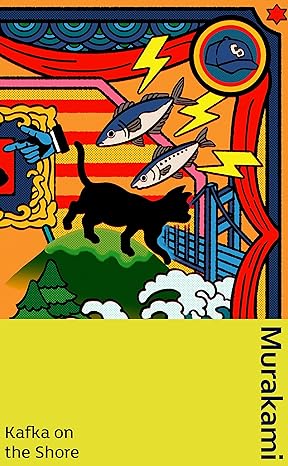
Two Interwoven Narratives
The novel follows two main storylines that gradually intertwine. The first centers on Kafka Tamura, a 15-year-old who runs away from home to escape a dark prophecy foretold by his father. Kafka's journey brings him to a quiet library in the town of Takamatsu, where he encounters the enigmatic Oshima and the hauntingly mysterious Miss Saeki. The second narrative introduces us to Nakata, an elderly man with a limited intellectual capacity but an extraordinary gift—he can communicate with cats. Nakata's life takes a series of strange turns, leading him on a path that eventually intersects with Kafka's, unraveling deeper connections between their fates.
Fate, Free Will, and Identity
Murakami's novel delves deeply into the themes of fate, free will, and the search for identity. Kafka's struggle against his father's prophecy raises the timeless question of whether individuals can truly escape their destined paths. Murakami skillfully explores the tension between these forces, suggesting that while some aspects of our lives may be preordained, the choices we make still have the power to shape our outcomes. This theme is reflected in the novel's complex structure, where the characters navigate a world filled with symbolism, metaphors, and enigmatic signs.
Surreal Elements and the Subconscious
Murakami is known for his ability to blend the surreal with the everyday, and Kafka on the Shore is no exception. The novel is filled with bizarre occurrences—raining fish, talking cats, and supernatural guides—that serve as extensions of the characters' inner worlds and subconscious minds. These surreal elements are not just whimsical additions but are integral to the story, inviting readers to delve into the deeper layers of the psyche where the boundaries between dreams and reality blur.
Music and Literature as Narrative Tools
Music, particularly classical compositions, plays a significant role in the novel, providing a soundtrack to the characters' emotional landscapes. References to composers like Beethoven and Schubert are woven throughout the narrative, enriching the story with a melodic depth that resonates with the characters' experiences. Similarly, literature—both Western and Japanese—serves as a key to unlocking the novel's many layers, with Murakami's own passion for these art forms shining through and enhancing the reader's experience.
A Reflection on Loneliness and Human Connection
At its heart, Kafka on the Shore is a reflection on loneliness and the human yearning for connection. The characters, each in their way, are searching for something—whether it's love, self-understanding, or a place to belong. Murakami poignantly captures the sense of isolation that pervades their lives, even in moments of connection. Yet, despite their solitude, the characters find brief but meaningful connections that give their journeys significance.
Kafka on the Shore is a novel that invites deep contemplation and rewards readers who are willing to immerse themselves in its mysterious and layered world. It is a testament to Murakami's unique storytelling ability, where the ordinary is infused with the extraordinary, and the line between reality and imagination is beautifully blurred. For those familiar with Murakami's work, this novel stands as one of his most profound explorations of the human experience. For new readers, it offers a compelling introduction to the enigmatic and imaginative realms that Murakami so masterfully creates.